Office Spaces
Standalone offices and corporate buildings planned around workforce density, services load, and future reconfiguration — not just floor plate area.
Service · Commercial Construction
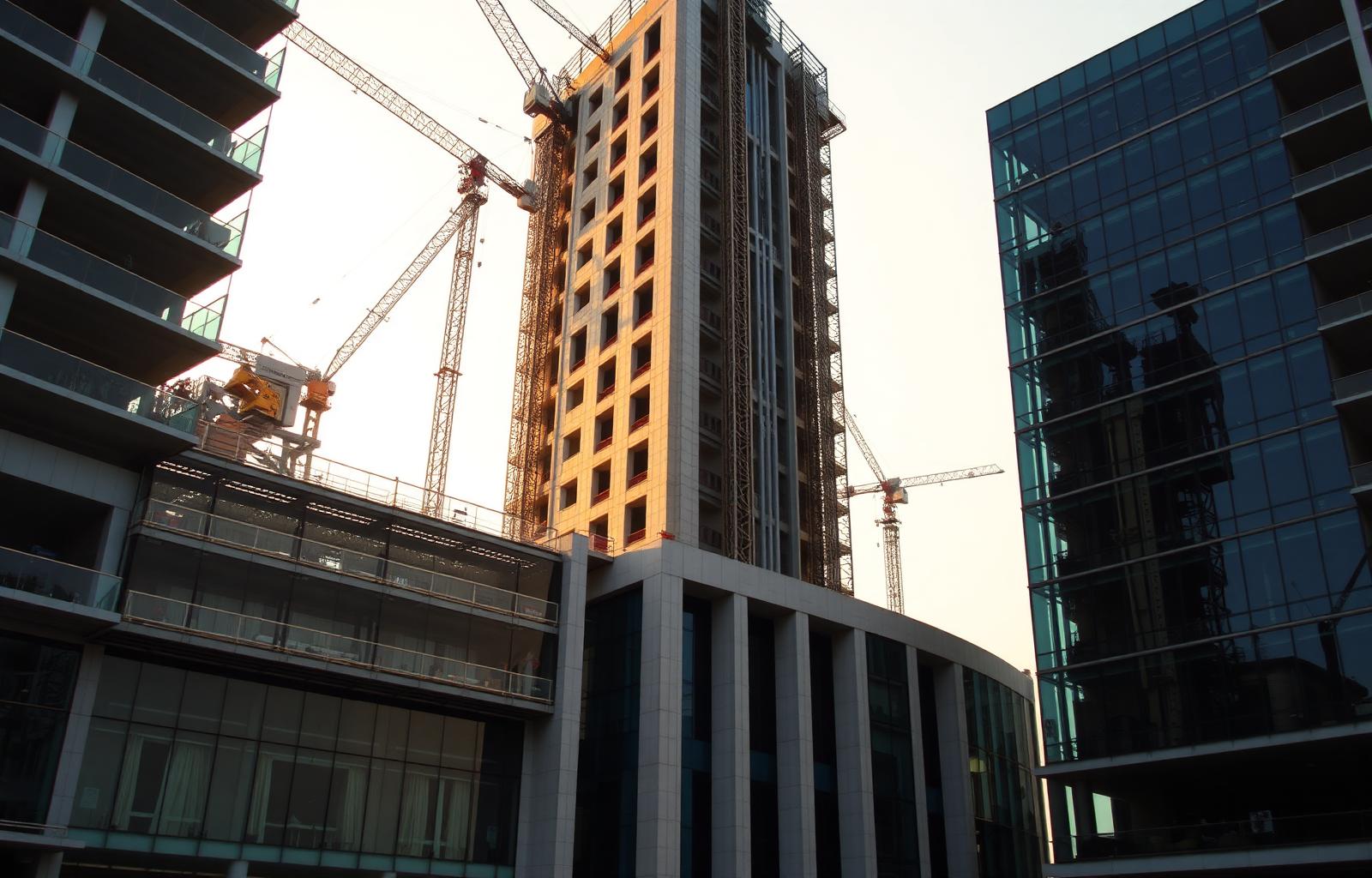
Commercial buildings are operational assets, not just structures. We approach commercial construction as a structured project — planning around business objectives, governing cost and schedule, and executing for long-term performance.
02 · Solutions
Each commercial format carries its own structural, services, and compliance considerations. The engagement is scoped around the specific building type and its operational intent.
Standalone offices and corporate buildings planned around workforce density, services load, and future reconfiguration — not just floor plate area.
High-footfall retail environments where storefront, customer flow, services, and brand finishes are coordinated as a single delivery scope.
Display-led environments designed around merchandising sightlines, lighting plans, façade legibility, and disciplined site execution.
Storage and distribution facilities engineered for floor flatness, clear heights, dock access, and operational throughput from day one.
Light-industrial and processing facilities where structural design, services routing, and statutory compliance drive the build program.
Schools, training centres, and campuses planned around classroom flow, safety codes, ventilation, and long-term occupancy patterns.
Clinical and diagnostic environments where MEP, infection control, and clinical adjacencies are treated as design inputs — not site decisions.
Buildings combining retail, office, and hospitality — coordinated for shared services, vertical transport, parking, and statutory compliance.
03 · Brief
Before we discuss drawings or per-square-foot rates, we work to understand how the building will support the business — over its operational life, not just at launch.
04 · Planning
Most cost and schedule risk on commercial projects is created — or removed — in the planning phase. We treat it as a deliverable, not a formality.
Before drawings or cost discussions, we document what the space must enable — operationally, commercially, and for the people who will use it daily.
Architectural intent, structural feasibility, and MEP loads are resolved together — so coordination issues do not surface mid-execution.
Costing is built from a measured BOQ tied to drawings and specifications, with contingency identified line-by-line rather than buried in a percentage.
The construction program is built backward from your operational date — fit-out, statutory clearances, and trial runs included.
05 · Functionality & quality
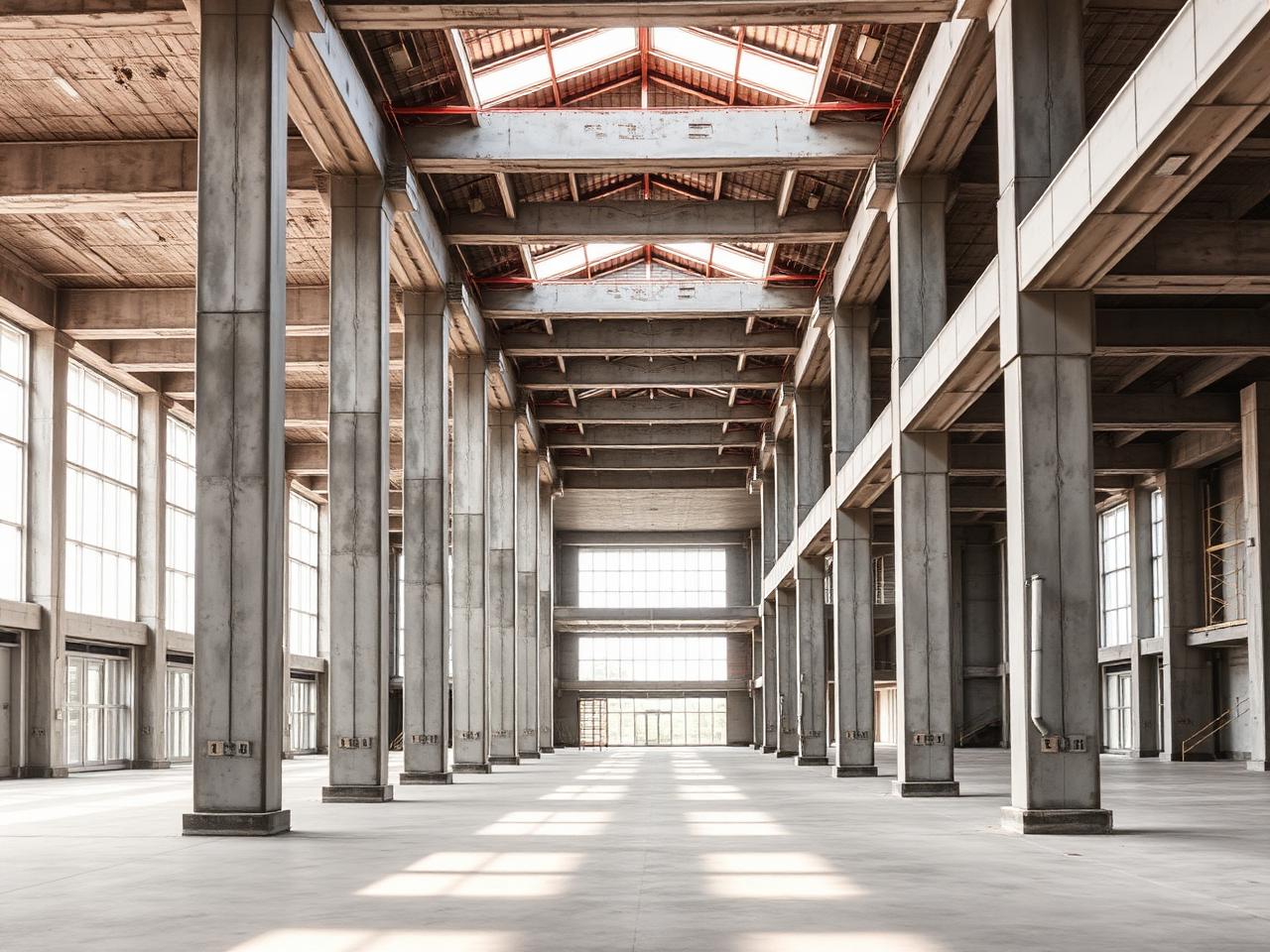
A commercial building is judged on how well it operates day after day. Functionality and quality are engineered in — not retrofitted at handover.
Layouts are tested against how people, goods, and services will actually move through the building — not just how the plan reads on paper.
Structural, electrical, HVAC, and plumbing systems are sized against documented usage — with margin for plausible growth, not arbitrary oversizing.
Concealed services, access panels, and maintenance routes are planned so future repairs do not require breaking finished surfaces.
Floor flatness, plumb, line, level, and finish tolerances are defined in writing and inspected — not left to site judgment.
06 · Budget
The goal is not the lowest quoted number. It is the most predictable final number — and the highest value the building delivers across its operating life.
07 · Challenges
These are the recurring problems on commercial builds — and the structural answers, not reassuring ones.
08 · Mistakes to avoid
Most commercial project failures trace back to a small set of avoidable decisions made before site work begins.
09 · Execution
Execution is governed by structure — not improvisation. The same disciplines apply across project types and scales.
A named project manager owns delivery end-to-end. Civil, structural, MEP, and finishes report into one chain of accountability.
Each stage has a written checklist signed before progression. Material approvals, test reports, and inspection records are maintained throughout.
A baseline program and cost plan are maintained and reported against. Slippages are surfaced with reasons and recovery actions — not absorbed quietly.
Specialist trades are onboarded against defined scope, rate, and quality expectations — and managed within the project program, not around it.
10 · Visibility
Stakeholders should never have to chase the project team for an update. Visibility is built into how the engagement is run.
11 · Long-term value
A commercial building is judged years after handover — by how it ages, how it operates, and how easily it adapts.
12 · Next step
Share your site details, intended use, and operational timelines. We will review and come back with a structured response — scope, feasibility, indicative cost band, and the engagement model that fits.
Continue exploring how Right Bloom Infra approaches projects.
See our process →